


H.R. Pfretzschner Bows: A Pillar of the German Bow-Making Tradition
Among German bow makers, H.R. Pfretzschner stands as one of the most recognized and respected names. Bows from this workshop have been trusted by musicians for generations, offering a combination of durability, balance, and musical responsiveness that continues to appeal to players today.
For musicians exploring fine bows, understanding the history and characteristics of Pfretzschner bows can provide useful insight into what makes these bows such reliable performers.
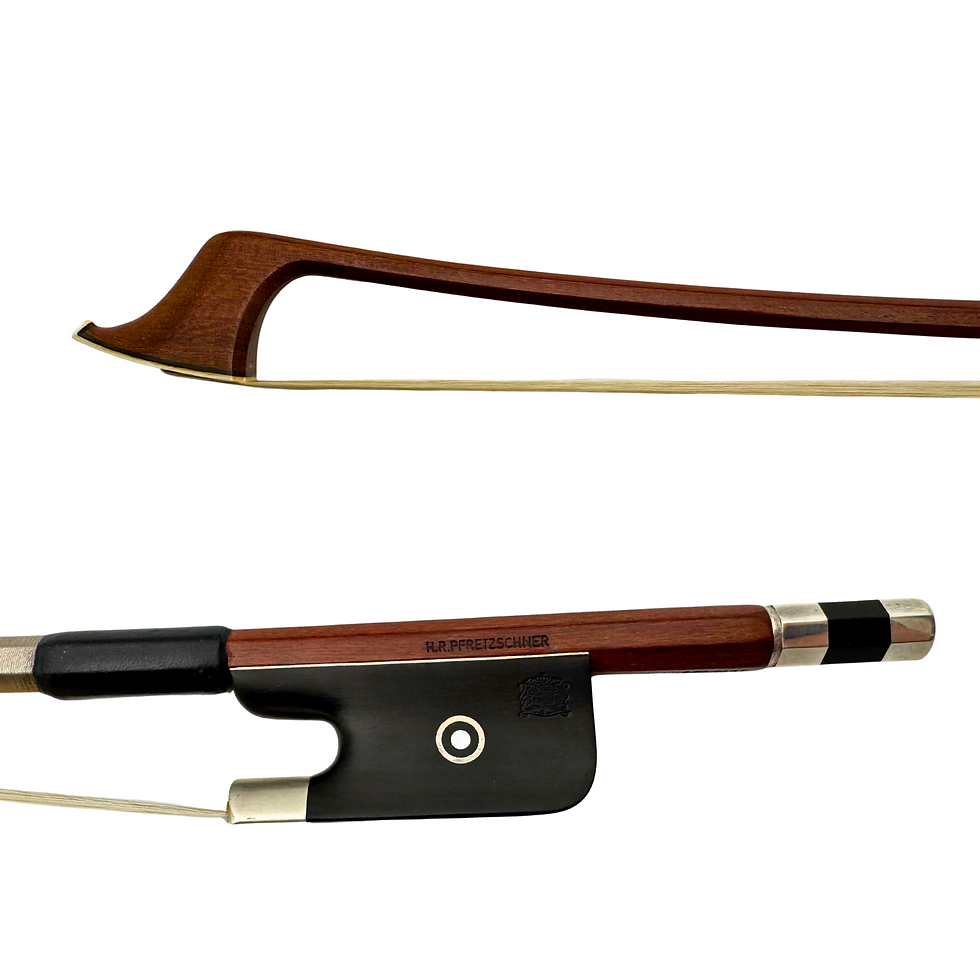
The Origins of H.R. Pfretzschner
The name H.R. Pfretzschner refers to Heinrich Richard Pfretzschner (1857–1921), who established his workshop in Markneukirchen, Germany, one of the most important instrument-making centers in Europe.
Markneukirchen had a long tradition of producing high-quality musical instruments and bows. Within this environment, Pfretzschner built a reputation for bows that combined strong German craftsmanship with refined playing characteristics.
His workshop employed highly skilled craftsmen and produced bows for violin, viola, cello, and bass. Many of these bows were made from high-quality pernambuco and finished with silver or nickel mountings, depending on the level of the bow.
Today, bows stamped H.R. Pfretzschner remain widely used by orchestral musicians, teachers, and advancing students.
Playing Characteristics of Pfretzschner Bows
One reason Pfretzschner bows remain popular is their practical, player-focused design. They tend to offer a balance between strength and responsiveness that works well across a wide range of repertoire.
Common traits players often notice include:
Strong, resilient sticks
Pfretzschner bows are typically built on durable pernambuco sticks that hold their camber well over time.
Reliable articulation
Many players appreciate the clarity and stability these bows provide, particularly in orchestral passages and off-the-string strokes.
Balanced feel in the hand
A well-made Pfretzschner bow often feels comfortable and centered, making it easier to control tone and dynamics.
Consistent craftsmanship
Because the workshop maintained high standards, many Pfretzschner bows offer dependable playing characteristics even decades after they were made.
A Note on the G.A. Pfretzschner Stamp
Players occasionally encounter bows stamped G.A. Pfretzschner, which can create some confusion.
While the name is related to the Pfretzschner family and the Markneukirchen tradition, G.A. Pfretzschner bows are generally considered a separate trade stamp and were often produced in larger workshop quantities. As a result, their quality can vary significantly.
By contrast, bows stamped H.R. Pfretzschner are more directly associated with the original Pfretzschner workshop and are typically regarded as the more desirable examples among musicians and collectors.
Why Pfretzschner Bows Still Matter
For many musicians, a good Pfretzschner bow represents an excellent balance of historical craftsmanship and practical performance. They often provide the strength and reliability associated with the German school of bow making while remaining accessible compared to the most expensive French bows.
As with any bow, the most important factor is how it performs in the player’s hand. When you find a strong example, a Pfretzschner bow can be a remarkably capable musical tool.
At ZS Strings, we focus on bows that combine craftsmanship, playability, and character—helping musicians find tools that truly support their sound and technique.

Comments